Active steering
We never left the root cause.
Traila began at the wheel-rail contact and stayed there. Active steering is where it started, a test tram in Zurich is where it was proven, and a next-generation vehicle is where it goes.
The idea
Point the wheelset where the rail goes.
A conventional wheelset is forced through a curve, flange against rail. Active steering reads the wheelset's position against the rail and corrects it in real time, so the wheel rolls through the curve instead of being dragged through it.
Less wear, less curve noise, less cost, from the same contact patch.
The vehicle
TX4: a Tram 2000, rebuilt to prove it.
To test active steering on real track, Traila took a decommissioned Tram 2000, fitted it with an active-steering bogie and a measurement suite, and ran it in Zurich. Ten sensor types rode along: rotary and linear encoders, inductive position sensors, accelerometers, laser-line scanners, pressure and speed sensors, strain gauges and cameras.
The system was designed and simulated before it ever turned a wheel, then refined through repeated field runs.

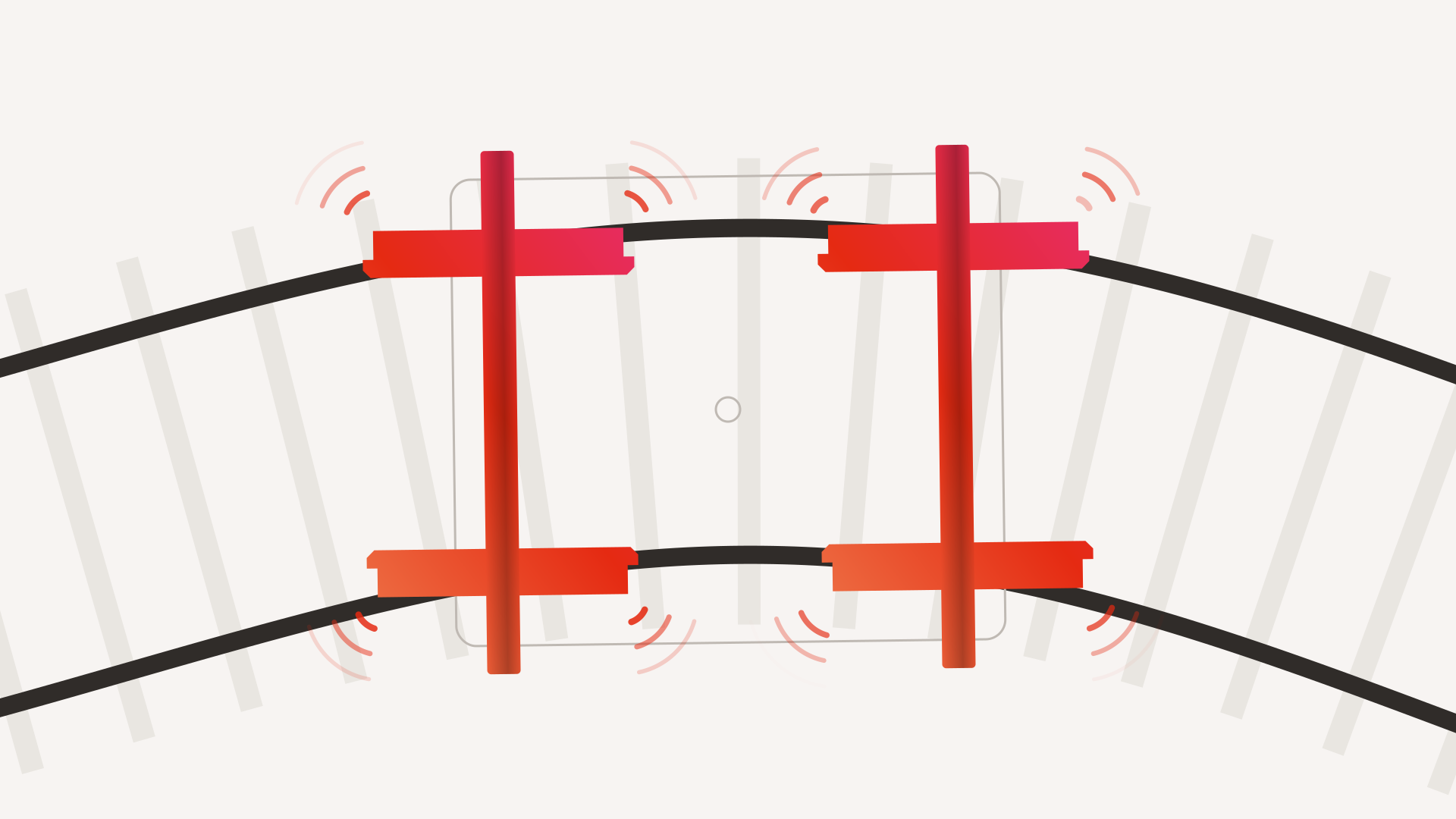
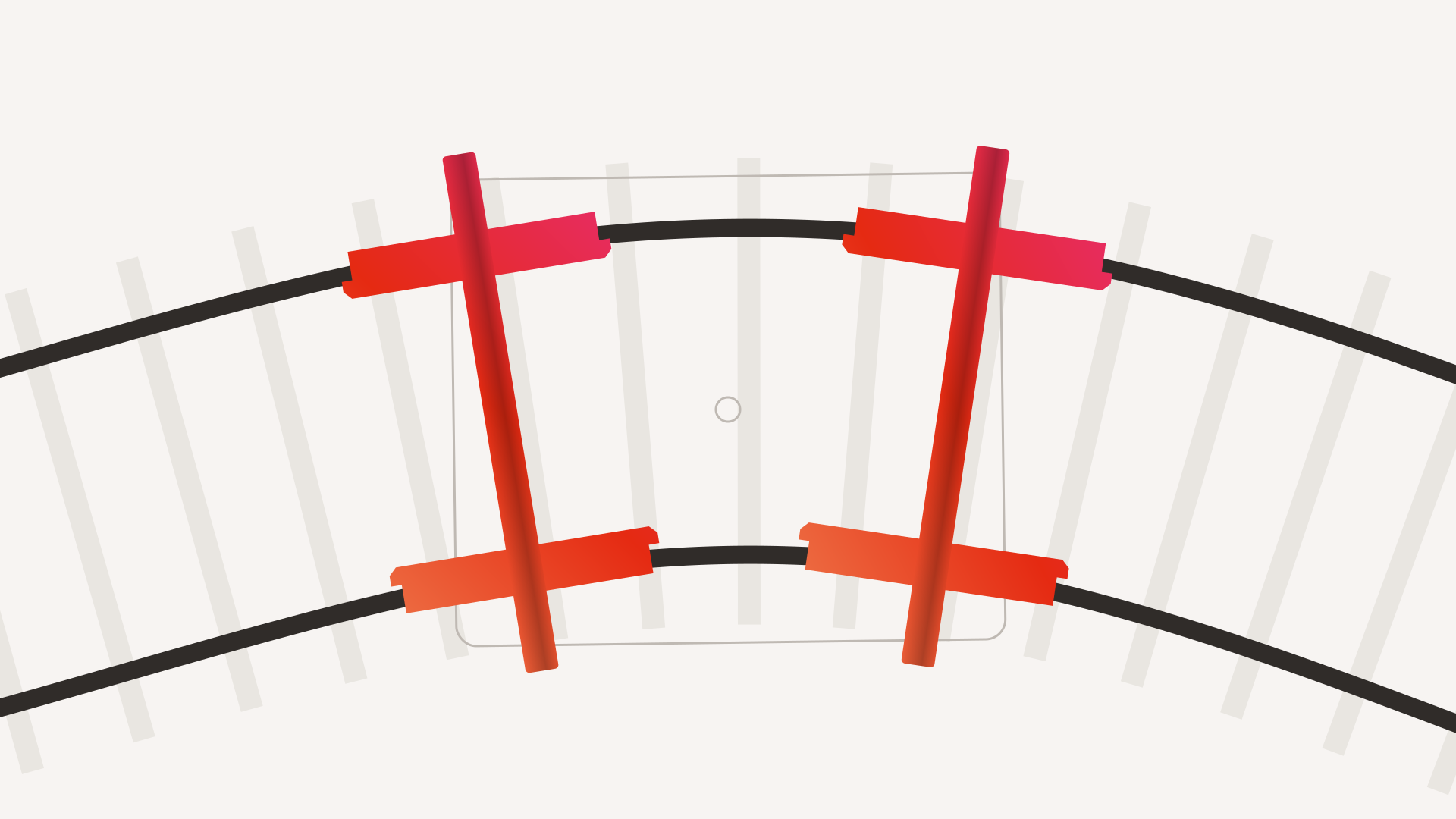
The inductive localisation system: the sensors that read the wheelset's position against the track.


On the track
Switches, crossings, curves down to 18.5 metres.
Field testing ran on VBZ's public network and on a closed test track, through switches, merges and crossings, on curves as tight as 18.5 m radius, at speeds up to 12 km/h.


Findings
What it showed.
- 01
An acoustic camera watched the same curve twice and measured curve noise falling from 65.0 to 61.5 dBA, conventional bogie against the active-steering axle.
Acoustic camera on TX4: sound intensity around a conventional bogie against the active-steering axle. - 02
In simulation, active steering cut the rear-bogie wear number by 45% across five curve radii from 16 to 76 m, and kept wheel rise within 0.5 mm at 6 and 12 km/h.
Laser-scan simulation: the below-vehicle view and the resulting contact-profile trace. - 03
The inductive sensors detected every track feature on every repeat run, at speeds up to 12 km/h.
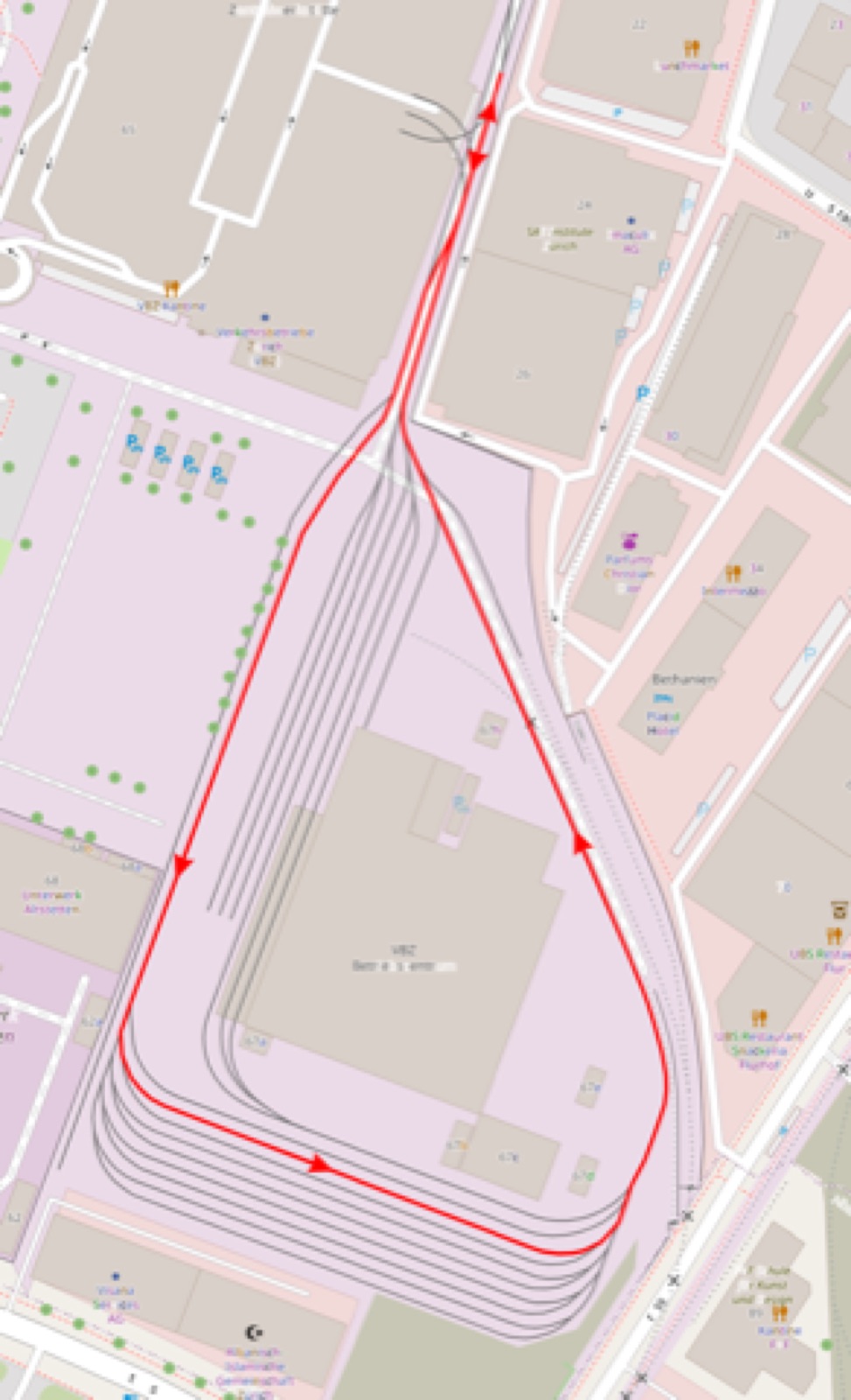
The test section, mapped. - 04
Laser-scan data refined the multi-body model until it matched on-track measurements; in curves the wheel flange stayed contact-free.

Results from the active-steering programme on TX4, since retired. Not conditioning field results, and not a product claim; Traila's conditioning work is on the case studies.
Next-generation vehicles
A rail vehicle designed from the wheel-rail contact up.
Actively steered, light, quiet, low-floor. It senses its own condition and conditions the track beneath it. Early concept stage.


The concept starts at the contact patch and builds outward. In-wheel traction does away with the gearbox and the driveshaft, so the floor runs low and flat and the wheel motor brakes the vehicle down to a stop.
Onboard acoustic and vibration monitoring reads the vehicle's and the rail's condition in real time; smart flange and top-of-rail conditioning deals with wear and noise at source. Body panels and platforms are designed to be recovered at end of life.
Working active-steering systems exist from years of research. The next step is integrating them into a complete vehicle, with academic and industry partners. That vehicle is research, not a product on sale; more to be announced.
- Wheel-motor mass, low-speed in-wheel unit
- about 45 to 50 kg
- Articulated compartment length, concept
- about 5 to 6 m
Patents and papers
Seven active patent families cover active steering, friction, monitoring and localisation. The research is peer-reviewed and conference-published; Traila took the Best Paper Award at the International Wheelset Congress 2023.

- Download PDF
A Feed-forward Featured Cascade PI Control Strategy for Tram Active Steering
- Download PDF
Development and Testing of a New Active Steering System for Light Rail Transportation
- Download PDF
Fast Analytical Wheel-Rail Contact Modelling for Realtime Capable MBS in HIL using MATLAB Simulink
Follow the research.
Book an operator briefing, or subscribe to the newsletter for the next-generation vehicle programme.